
Where water enters
Leaks, stains, and the paths water takes before it becomes visible inside the property.
Roofing · Repair / Arkansas
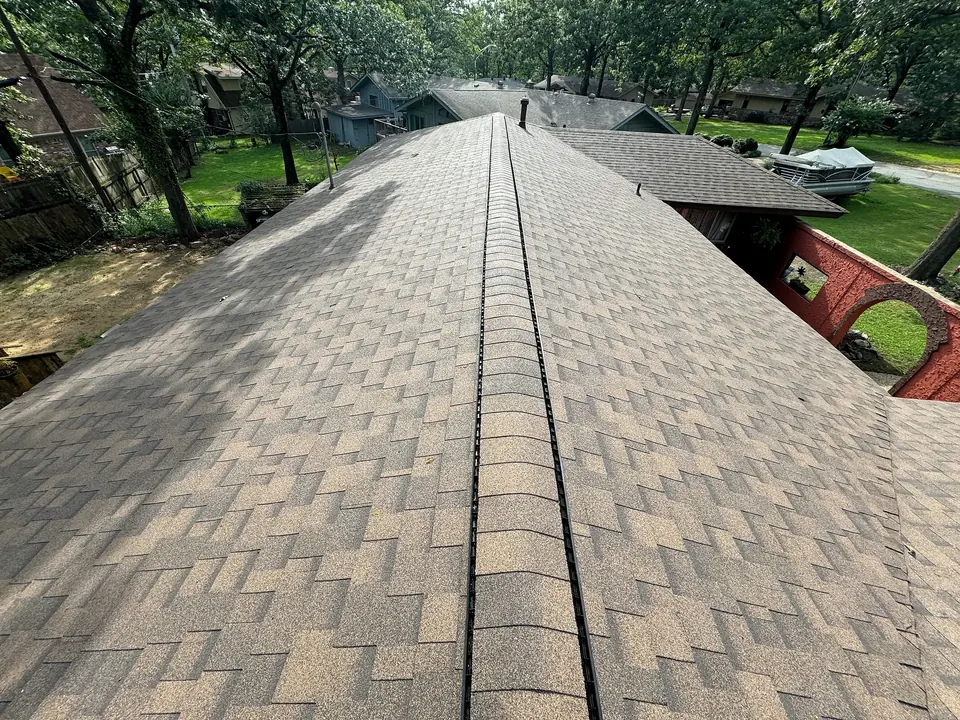
Most repair calls begin with a symptom — a stain, a drip, a missing shingle. The useful work is finding where water is actually getting in, and why, before anyone starts cutting.
Let’s discuss your propertyA thoughtful starting point
Leaks, stains, and the paths water takes before it becomes visible inside the property.
Missing, lifted, cracked, or displaced shingles and the sealant or fasteners involved.
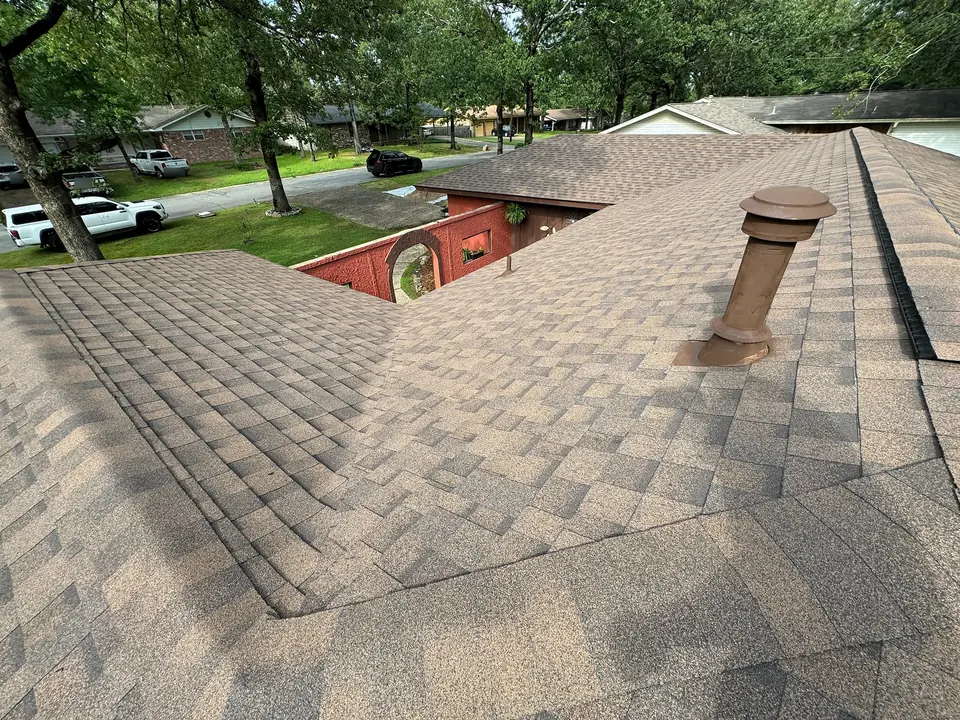
Wall intersections, valleys, chimneys, skylights, vents, and other penetrations.
Ventilation, blocked drainage, debris, and storm damage limited to part of the roof.
Observation → Understanding → Scope
A leak can point to a shingle, a transition, flashing, or a detail further up the roof. Understanding the cause helps shape a more useful repair plan.
Start with an inspection01 / What we look at first
A leak rarely begins where it appears. Water travels along decking, underlayment, or a framing member long before it reaches a ceiling, so the visible stain is a starting point rather than an answer.
The most common repair areas are flashing and penetrations — the details where two surfaces meet or pass through the roof. Shingle damage from wind or a failed sealant is the next most frequent cause.
02 / Repair or replacement
If the surrounding roof is sound and the damage is contained, repair is the sensible answer and usually the better one. If damage is widespread, if the deck is affected, or if the same area keeps failing, replacement is more predictable.
That decision is easier when the condition is documented rather than argued. Photos, notes, and a written scope give you something concrete to compare options against.
03 / Localized storm damage
After wind or hail, damage is often limited to specific slopes, edges, or penetrations. That is usually a repair conversation rather than a replacement conversation — but it depends entirely on what the inspection shows.
The Alden Stone approach
One point of guidance. A considered path from the first inspection through completion.
Take a closer look at the property and the visible conditions.
Make sense of the findings, the priorities, and your questions.
Define the scope, materials, and practical next steps.
Bring the right people and details together as work moves forward.
Review the work, the details, and the path ahead.
A little more clarity
We start from the visible symptom, then work backwards through the roof assembly to the detail most likely responsible. Flashing and penetrations are checked early because they are the usual source.
Often, yes. Repair makes sense when the damage is contained and the rest of the roof is sound. An inspection is what tells the two situations apart.
It depends on the cause, the extent of the damage, and the weather window. We confirm the scope first, then give you a realistic picture of the work involved.
For Arkansas property owners / A sourced starting point
Explore claim steps, estimate terminology and Arkansas consumer-handling standards. Construction documentation and insurance coverage are different conversations.
Explore insurance & storm resources →Alden Stone / Your next step
Tell us about your property. We’ll follow up to understand what you need and discuss a time to take a closer look.
Request a consultationA request starts the conversation. Your appointment is confirmed separately.