
Siding condition
Impact damage, failed seams, loose panels, cracking, and worn finishes.
Exteriors · Siding / Arkansas
Siding is the outside of the envelope you live inside. When it is damaged, the question is rarely just how it looks — it is whether water is getting behind it.
Let’s discuss your propertyA thoughtful starting point
Impact damage, failed seams, loose panels, cracking, and worn finishes.
Sheathing, house wrap, flashing, and anything that suggests moisture has been getting in.
Corner trim, window and door surrounds, and where siding meets roofing.
Gutters, downspouts, and roof work that changes how the exterior handles water.
An architectural perspective
Look at the roofline, the wall finish, and the places they meet. Material choice is one part of a coordinated exterior plan.
Consider the character of the existing property.
Bring roof, trim, and wall finishes into the same conversation.
Plan the practical details where materials meet.
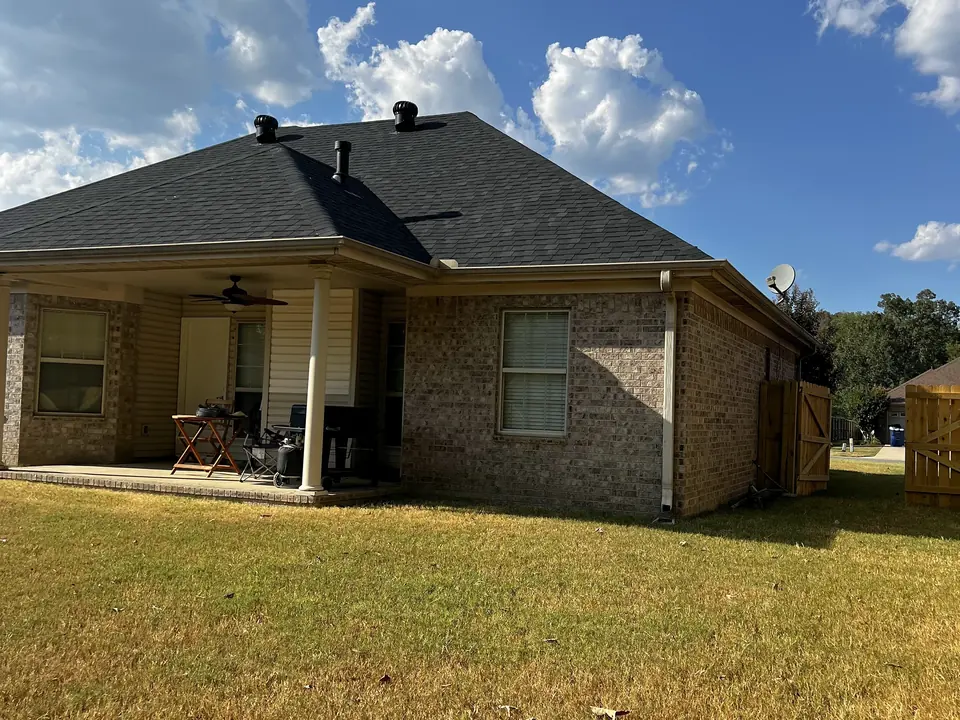
Palette studies are illustrative, not available siding colors. The photograph shows exterior coordination, not an identified siding product.
01 / Damage and the wall behind it
Impact damage is the obvious one: dimpled or broken panels after hail, or siding pulled loose where wind caught an edge. But siding also fails quietly — open seams, loose fasteners, failed caulk, and worn finishes let water move behind the panels.
That is why a siding evaluation is really an evaluation of the envelope. What happens behind the panel matters more than what the panel looks like.
02 / Repair or replacement
Isolated damage to a few panels is usually a repair. Once the material itself has failed — brittle, faded, or open along its length — matching it becomes harder with each panel, and replacement is usually the more coherent answer.
Repairs and replacements also look different on the building. A repair should be planned so it blends with what is already there rather than announcing itself.
03 / Working with roofing and gutters
Siding, roofing, and drainage work touch the same edges, the same trim, and often the same access. When more than one system needs attention, sequencing them together is usually cleaner than treating them as separate visits.
The Alden Stone approach
One point of guidance. A considered path from the first inspection through completion.
Take a closer look at the property and the visible conditions.
Make sense of the findings, the priorities, and your questions.
Define the scope, materials, and practical next steps.
Bring the right people and details together as work moves forward.
Review the work, the details, and the path ahead.
A little more clarity
Yes, when the damage is contained and the remaining material is still sound. If panels are brittle, faded, or failing along their length, replacement usually becomes the better option.
Soft areas under trim, staining near openings, damp sheathing visible where a panel has been removed, and interior moisture symptoms near exterior walls are all worth having looked at properly.
Often it makes sense. Both systems meet at the roofline and trim, so doing them together reduces repeat visits and avoids new siding being fitted around old roof edges.
Alden Stone / Your next step
Tell us about your property. We’ll follow up to understand what you need and discuss a time to take a closer look.
Request a consultationA request starts the conversation. Your appointment is confirmed separately.