
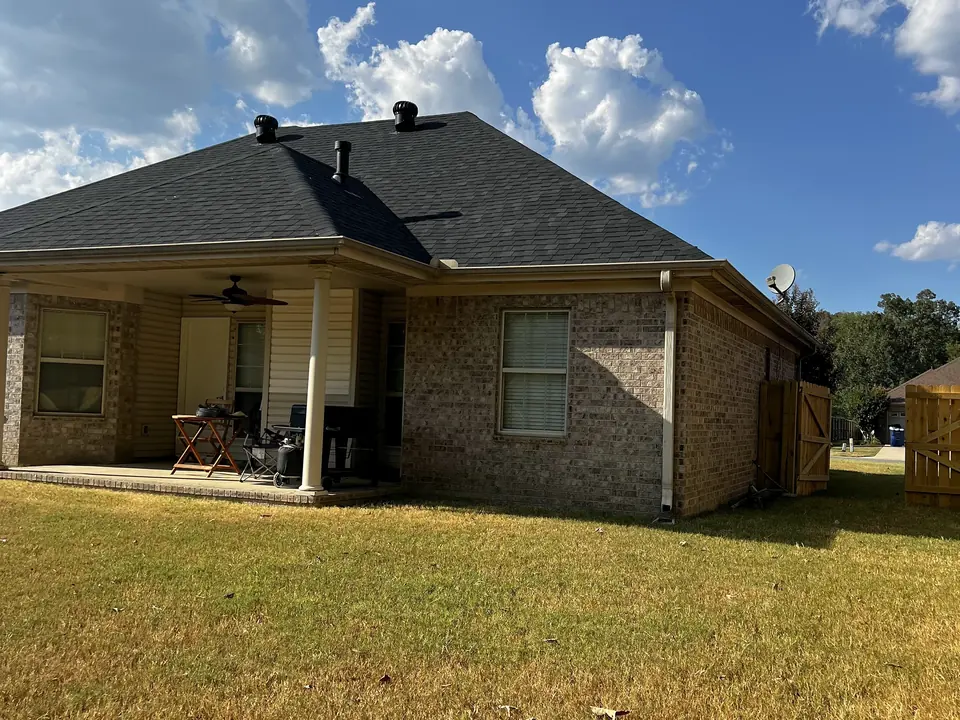
Begin with the cause and policy wording
Wind and hail are examples of causes that homeowners policies may cover. The insurer still evaluates whether the reported damage resulted from a covered cause, along with exclusions and conditions. Wear, maintenance issues and other causes may be treated differently.
Ask which facts and policy provisions support the determination. A construction observation describes the condition; it does not settle whether the policy covers that condition. A photograph of a lifted shingle is evidence of a visible condition, not a coverage promise.
Consider each affected building area
Depending on the cause and policy, direct physical damage may involve roofing, siding, gutters or other building components. Resulting interior damage may need separate documentation. Record each affected location so the insurer can evaluate it under the relevant coverage.
Do not assume that an exterior claim includes every interior expense, or that replacing roofing automatically includes undamaged gutters. An inspection should identify actual conditions and the contractor should distinguish required construction operations from optional improvements.
Ask about exclusions and endorsements
The policy includes more than the declarations page. Endorsements can change roof valuation, covered causes, deductibles and limitations. Ask for the complete applicable wording, especially when an estimate or payment differs from what you expected.
General descriptions of homeowners insurance do not override your contract. For example, an RCV provision elsewhere in a policy does not establish that wind or hail damage to roof surfacing is also valued at RCV. Ask the insurer about the roof-specific provisions.
Separate a deductible from a coverage reduction
A deductible is the portion assigned to you under the applicable policy. Some deductibles are fixed dollars; others are percentages. Wind/hail may have its own deductible. Ask the insurer to identify the amount, the basis and the applicable endorsement.
A difference between the construction cost and a payment can have several explanations. It may involve depreciation, a limit, excluded work, an estimate difference or a deductible. Reading only the net-payment line makes those distinctions hard to see.
Matching and code upgrades need specific review
Do not assume a policy pays to replace an entire roof because an identical material is unavailable or a visual match is imperfect. Document availability and the construction concern, then ask the insurer what policy language and applicable requirements govern its decision.
Likewise, a verified building requirement and insurance payment for that work are separate questions. Identify the applicable local authority, adopted requirement and property conditions. Ask about ordinance-or-law provisions where relevant; do not assume every code-related item is insured.
Use a hypothetical carefully
Suppose a storm visibly damages roofing on one slope and a nearby gutter. Those are two construction observations to document. The insurer may evaluate them separately, apply the relevant policy provisions and explain which work it accepts. This example does not predict the outcome of a claim.
Ask Alden Stone to inspect and explain construction conditions. Ask the insurer or agent about policy application, and a licensed attorney about legal interpretation when needed. The estimate and coverage guides explain how to keep these conversations organized.