
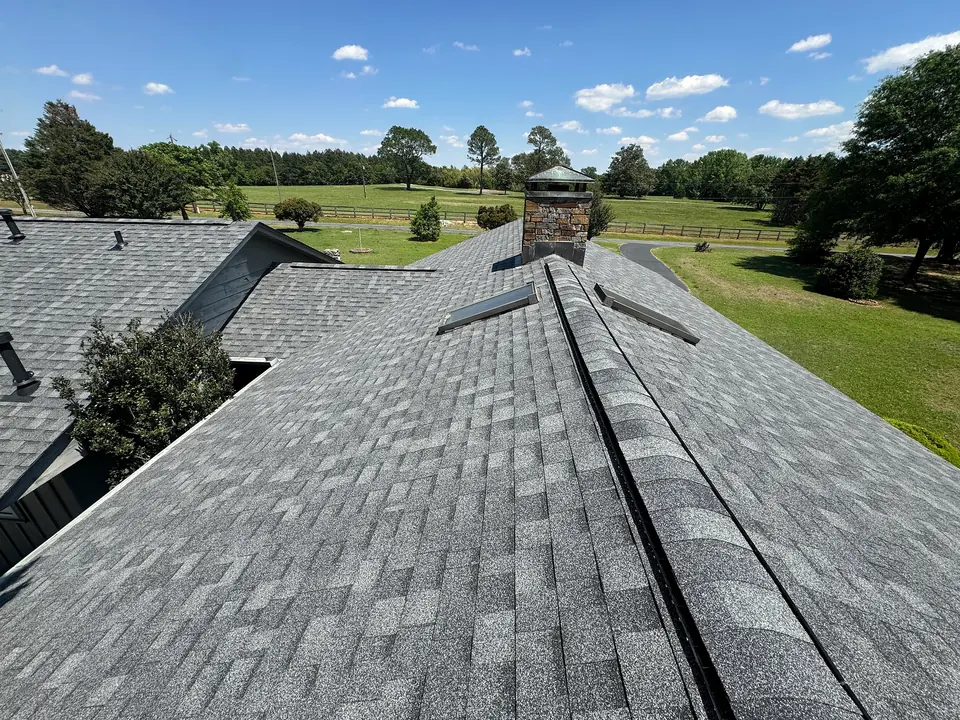
Identify the affected areas
Determine which slopes and details show damage, which conditions appear older and which areas require further examination. A localized pipe-boot issue and widespread damage across several roof planes may call for different construction approaches. Neither should be diagnosed solely from a distant photo.
Document the limits of the inspection. Safe access, weather and concealed layers can affect what is known. If an interior stain is present, investigate its source rather than assume it proves a particular roof component failed.
Consider condition as well as age
Roof age provides context, but age alone does not establish repairability or insurance coverage. Condition, brittleness, prior repairs and the ability to work with surrounding materials also matter. A trained roofer should explain the observed constraints and the proposed approach.
Do not use a single claimed lifespan as a rule that every roof needs replacement. Materials, exposure and maintenance differ. The useful question is whether the affected construction can be repaired appropriately given the actual assembly and condition.
Review the connections a repair will disturb
A repair may involve more than the visibly damaged shingle. Lifting nearby material can expose flashing, underlayment and fastening relationships. At a wall or penetration, the repair method must consider how water moves across those connections.
Ask which adjacent components must be accessed or disturbed and why. A proposal should distinguish verified damaged parts, operations needed to carry out the repair and optional improvements. The roof explorer illustrates the system relationships without presenting an installation recipe.
Check materials and applicable instructions
Confirm suitable material availability and the product requirements relevant to the repair method. Do not assume a different color alone establishes full-roof replacement, or that an unavailable exact product proves a particular insurance result. Document the construction issue precisely.
Where code requirements are relevant, verify the local jurisdiction’s adopted provisions and their application to the actual work. Avoid generic claims that a code automatically requires an entire replacement. Policy payment for any required work needs its own review.
Compare defined alternatives
Ask for the areas, materials, operations and limitations of each proposed option. A smaller repair should explain what it addresses and what remains; a replacement should explain its extent and which system details are included. Review the practical benefits without relying on pressure or scare tactics.
Consider access, timing, concealed-condition procedures and the agreement for additional work. A clearly defined scope helps you make a construction decision even when insurer questions are still being reviewed.
Keep the coverage question with the insurer
An owner may prefer replacement, but preference does not establish coverage. A contractor can explain a construction recommendation and support it with observations. The insurer applies the policy to the facts, and legal disputes belong with appropriately licensed legal counsel.
Alden Stone offers inspections and construction-scope conversations. Request an inspection for uncertain conditions or an estimate for a defined repair/replacement project. Your request is reviewed before availability and an appointment are confirmed.